01. Introduction

While fire and water damage remain top risks in construction, one of the biggest risks is climate-driven catastrophic losses, such as floods, hail, and wildfire. In 2025 alone, Canada produced record insured weather losses of $2.4 billion—nearly three times higher than the losses recorded the previous year. At the same time, the proliferation of artificial intelligence has made cybersecurity a first-class project risk for residential, commercial, institutional, and infrastructure construction.
Other emerging risks could impact projects for years to come. For example, ongoing skilled trade shortages are delaying projects and increasing labour cost inflation. BuildForce Canada’s national outlook estimates the industry will need to hire an additional 380,500 workers by 2034. This is now a sustained business risk—when less experienced crews are used, there’s a higher chance of schedule slippage and quality risk, as well as the potential for increased subcontractor claims.
One way of mitigating the labour shortage is through the increasing adoption of modular and off-site prefabricated construction, which also helps to reduce on-site schedule risk and exposure to weather. While prefabrication and modular adoption can help build supply chain resilience, it also opens up new exposures around transporting cargo, off-site assembly, and factory quality assurance.
Supply-chain issues remain a challenge, with material price indices remaining volatile. This can result in bid erosion, disputes over price escalation, and procurement delays. “We’ve recovered a bit from the pricing challenges of the supply chain, but we haven’t recovered from supply chain issues,” says Ryan Jones, Vice-President of Risk Services with Northbridge Insurance.

The contractual and regulatory environment is also evolving. In mid-2025, the Canadian Construction Documents Committee (CCDC) released significant updates to several key contracts that affect procurement, risk allocation, and payment procedures. Provinces have also updated procurement and safety compliance expectations, so construction firms and contractors should be aware of contract clauses that drive insurance obligations and indemnity allocation.
Risks vary in size and complexity, and they can evolve throughout a project. Risk management, as well as proper policies and procedures, can help to avoid many of these risks, hazards, and accidents. But if the worst-case scenario does occur, having the right coverage—along with the right documentation—can make the claims process much smoother.
To help those in the construction industry avoid costly claims whenever possible, this whitepaper covers some of the biggest risks they may face, and how to mitigate those risks to keep employees safe and keep the project running on time and on budget.

02. Climate-driven catastrophic losses
Extreme weather events are becoming more frequent and intense, from torrential rain and wildfires to snowstorms and heatwaves. Severe weather can cause property damage to construction sites, partially constructed buildings, and equipment. Larger, more frequent claims mean greater business interruption exposures, higher rebuild costs, and more stringent underwriting.
0K+
Insurance claims were filed in 2024 due to severe weather events

More than a quarter of a million insurance claims were filed in 2024 due to severe weather events, many of which experienced forced closures, suspended operations, or significant slowdowns. According to Northbridge Insurance’s internal claims data, loss causes for property in 2024 included wind-related damage (28%), water intrusion/seepage (10%), fire (8%), and building collapse (5%).
Flooded transport corridors and wildfire-impacted regions can delay shipments and interrupt critical supply chains nationwide. Operational delays and prolonged service interruptions caused by severe weather can impact an organization’s reputation. Businesses unable to quickly restore operations or fulfill commitments in response to disasters can risk long-term damage to their customer and community relationships.
Extreme weather is an unavoidable reality. To mitigate risk, construction firms should require site-specific climate hazard assessments, such as flood maps and wildfire risk maps, and revise their contingency and project interruption limits. They can also include resilient design, such as elevation, non-combustible temporary storage, and early fire-suppression measures.
Learn more to protect your business →Commercial Property Insurance can help cover damage to buildings, inventory, and equipment caused by extreme weather. However, reviewing policy details is essential to understand exclusions, such as coverage for floods, which often require additional coverage.
Learn more to protect your business →Business Interruption Insurance can help cover income lost during periods of operational downtime. It can help pay for ongoing expenses such as employee wages, rent, and loan repayments while a business rebuilds or repairs physical damage.

03. Water, wind, and hail
Water Damage
Water damage is an increasingly significant concern for construction firms, driven by changing weather patterns and extreme precipitation, such as heavy rainfall, flash flooding, and rapid snow melt. They can also arise from poor drainage, inexperienced personnel, or faulty workmanship. For example, the improper installation of pipes and connections by various contractors could result in large losses when piping systems are charged or pressurized for the first time.
Since those connections may initially hold, it could take weeks or even months before incomplete or improper installations are exposed. But once a building is enclosed and interior finishes are being installed, the resulting damage to drywall and finishing trim greatly increases the cost of repairs.
Many of these losses are preventable with proper risk management, which includes supervision, testing, and accountability. Having water damage protocols in place, along with adequate planning and continuous monitoring, will go a long way to mitigate risk.

Water Management Devices
One key to water damage mitigation is rapid detection and quick isolation—and the taller the building, the more important this becomes. Water detection devices and smart sensor technologies can play a key role in both detection and isolation by providing real-time monitoring of leaks and floods. Some smart sensor platforms even offer analytics to identify small problems before they become bigger ones.
Devices should be installed on incoming risers to differentiate between normal and abnormal flow—such as water flowing when it shouldn’t be, excess flow, or leakage. Anything out of the ordinary will trigger an alarm (typically to an off-site ULC-approved monitoring facility). These devices should also be installed on floors situated under incoming water risers, in electrical equipment rooms, around air conditioning units, at the bottom of elevator shafts, under hot water tanks, and under heating boilers.

Wind Damage
Partially constructed houses and other light-frame wood buildings collapse from high winds every year in Canada. Damage from high winds is not only costly, but often leads to delays in construction and home closures. There’s also the possibility that someone could get injured.
The National Building Code of Canada (NBCC), as well as provincial building codes, specifies the design wind speed in specific regions. However, the NBCC’s building code applies to completed buildings; there are no hard-and-fast rules for lateral bracing during construction.
A best practice is to brace the walls, particularly on the first storey where there are large openings for windows, doors, and garage doors. There are also temporary measures to help add lateral strength during construction:
- End walls, side walls, and interior walls can be braced using temporary wood bracing running in the direction of likely collapse.
- Diagonal wood or metal bracing can be used in both directions on each end wall to prevent the structure from leaning or rocking in either direction.
- Temporary structural wood sheathing can be used over openings, such as windows and doors (especially if the site is going to be unattended overnight or over the weekend).

Hail Damage
Hail claims have surged. It’s of particular concern in the Prairie provinces, especially southern Alberta, where hail has caused billions of dollars in insurance claims over the past 25 years. The August 2024 Calgary hailstorm alone caused an estimated $3.2 billion in insured losses—the second costliest natural disaster in Canadian history.
On construction sites, hail can cause immediate damage to partially competed or exposed structures, damage the building envelope (which can lead to interior water damage), and damage construction equipment, vehicles, and rooftop HVAC units.
But hail can affect any region in Canada. And the damage from hailstorms is expected to increase “due to the increased concentration of assets in Canadian cities and suburban housing developments, and the ever-growing costs of replacing damaged and destroyed property,” according to the ICLR.
It’s important to understand what types of damage are covered under your policy and if there are ways to reduce your deductible.

04. Fire
Fire is a common risk for construction firms, since their operations require hot work, heating units, and combustible products. It doesn’t take long for a small fire to grow into a devastating blaze that can wipe out an entire operation. Recovering from this takes time and money—major cleanup and restoration can take weeks or even months.
A newer risk is related to building materials. “People are using a lot more decorative structural wood, which is essentially wood chips and glue that’s compressed together. It looks like large dimensional wood, but it’s highly flammable, and the fire spread rates are exponentially,” says Jones.
According to the most recent available data from Statistics Canada, nearly 16,000 structural fires occurred in Canada in 2021. Of those, 1,686 fires were caused by an incendiary act, which refers to “deliberate acts of arson caused by individuals or groups of persons during riots, civil disturbances, acts of vandalism or mischief,” as well as suspicious fires.
0k
Structural fires in Canada in 2021 according to Statistic Canada
No Smoking Policy
One of the biggest hazards on job sites is smoking. It’s a simple hazard, but it’s one of the costliest out there— and it’s easily preventable with a no smoking policy. Post “No Smoking” signs around the job site and designate a safety manager to enforce the policy, particularly in the vicinity of hazardous operations. If you do permit smoking off-site, create a designated smoking area away from combustible materials and ensure there are fire-safe ashtrays available.

Temporary Heaters
Special attention should be paid to temporary heaters, which are commonly used for ground thawing, concrete curing, or general drying purposes. Improperly installed temporary heaters
are often the cause of major fire losses on construction sites.
The most common fire hazard related to temporary heating is lack of proper clearance
when the unit is installed. Radiant heaters are common on construction sites; these self-
contained portable units are typically unvented and use LPG propane/natural gas or liquid fuel. The heat radiating from these types of units is intense and commonly requires at least eight feet of clearance. LPG tanks should be stored outside of the building and chained or secured to avoid tipping over.
Temporary heaters should be installed and operated according to the manufacturer’s instructions. Each heater has a data plate indicating the necessary clearances to combustibles, ventilation requirements, and fuel type, so be sure to adhere to those specifications. Multi-purpose fire extinguishers (minimum 4A:40B:C) should be provided wherever temporary heaters are used.
Alternatives to temporary heating
Using alternative solutions will significantly help to reduce your risk of fire. If possible, a building’s permanent heat source should be used. Heating units that pipe hot water into a building and distribute heat through various methods are another safe alternative to an open flame heater, although the heater should be located in a safe location outside of the building.

Hot Work
Hot work is defined as any process that uses or generates open flames, sparks, or heat, such as welding, cutting, grinding, or brazing—and it represents an extremely high fire risk. It has the potential to cause major losses both at your facilities, as well as on the sites where hot work is carried out by contractors.
Fire and explosions typically occur because of negligence, improper training (or lack of training), and absence or non-adherence to strict hot work safety guidelines and protocols. All of these are controllable, as they result from human error. Loss prevention practices—such as proper site assessment and preparation, employee training, safety equipment such as heat shields, and adequate controls—all contribute to managing the risks associated with hot work.
Risks associated with hot work
Open flame work such as welding and cutting requires a great deal of caution. Operations such as grinding, thermal spraying, roofing membrane application, and frozen pipe thawing are other examples of risks associated with hot work.
Potential fire scenarios include welding and cutting metal in open areas or near pits, in proximity to combustible materials. Sparks and hot slag generated by hot work processes can end up on floors, ceilings, walls, and other elevated surfaces or get lodged into hidden cracks and crevices.
Sparks and hot slag can also travel great distances and have the potential to ignite any combustible material in their radius—horizontally and vertically. Be cautious within a minimum radius distance of 15 metres; all combustible materials lying in the vicinity should be removed or covered.
Creating a hot work management program
A hot work management program establishes safety protocols aimed at identifying hot work hazards and controlling their associated risks. It should include policies (where hot work is permitted and by whom), procedures (how to prepare for hot work and which tools are approved for use), the assignment of responsibilities, and accountability for all aspects of hot work, as well as training and communication.
Fire extinguishing equipment should be maintained in a state of readiness within immediate reach of workers and be appropriate to the potential fire or explosion hazard. This could include portable fire extinguishers, a fire hose, pails of water, or buckets of sand, depending on the nature and quantity of the combustible material exposed. Workers should also be trained in the proper use of the fire extinguishing equipment.
For contractors performing hot work at a client’s site, check if they have their own hot work management program and adhere to it strictly, including any permit system that’s in place. Obtain your client’s approval and sign-off, and document all your procedures and actions. Also check with your insurance broker for any limitations associated with liability coverage pertaining to hot work.

05. Theft
Tens of millions of dollars’ worth of heavy equipment, tools, and materials are stolen each year from Canadian construction sites. Construction theft in Canada results in about $45 million in annual losses, including $15 to $20 million in Ontario alone. Theft can be traced back to local bands of thieves, but increasingly organized crime is moving onto building sites.
$0M
in annual losses within Canada.

After all, heavy equipment and tools are easy to steal, easy to sell, and have a low recovery rate, often being shipped out of the province or country within hours. High-value items such as skid steers, backhoes, excavators, generators, compressors, and power tools like drills and saws are coveted by thieves. So are valuable raw materials, such as lumber, copper, steel, or aluminium used in scaffolding.
Only 22 to 25 per cent of stolen heavy machinery is ever recovered. Overall, recovery across tools, vehicles, and equipment remains below 25 per cent. The cost of replacing stolen equipment, tools, or materials isn’t the only consequence of theft. Delays in project completion can increase costs and possibly trigger late penalties. Additionally, contractors could be held liable if the stolen equipment causes damage to people or property.
Construction firms may want to consider common mitigation measures on job sites such as fencing with gate access control, CCTV and motion-detection lighting, GPS tracking, asset marking, locked storage, alarms, and on-site guards.

Tool Theft Control
Contractors should avoid leaving their tools out for extended periods of time. For an additional layer of security, consider using on-site lock boxes with hardened locks (with hidden shackles) or secure tools in an enclosed building with alarms, if they must stay on the job site overnight. Also use etching or marking technology to deter theft and discourage re-sale.
Record Keeping
Detailed records of equipment and tools used on a job site are necessary for making a claim in the event of theft. Equipment records should include details such as serial number, make and model, date purchased, value/cost, markings, photos, and any details that help with identification. Tool records should include date of purchase, description, and photos.
Materials Storage
Coordinate delivery of materials with suppliers so they arrive only when you need them and limit the amount of materials left on the job site to reduce the potential for theft. Store materials in a secure location, preferably a fenced compound with an alarm system. Consider increasing security measures after valuable materials or equipment have been brought onto the site or installed in the project.
Remote Site Surveillance Monitoring
Given that theft on construction sites is a growing problem, remote site surveillance monitoring is an increasingly popular option. A good surveillance system can help to mitigate risk by including full perimeter protection and acting as a deterrent, making criminals think twice before committing theft or arson.
It could also allow for the early detection of a problem, before it becomes a much bigger problem. During off-hours, for example, emergency crews could be immediately notified of theft or arson, which could reduce the scope of the damage, claims costs, and impacts of business interruption.
Site surveillance technology is also becoming much more sophisticated. Today’s all-weather cameras offer pan-tilt-zoom, day and night vision, infrared technology, power backup, and two-way voice capability, while live monitoring via a remote monitoring station can provide regular full-site video tours.
It’s important that you ensure surveillance cameras provide a complete view of the site’s perimeter. As the project develops, blind spots may occur as buildings are constructed, so the system should be re-evaluated periodically to ensure full visibility. Consider using a backup monitoring centre to record and hold your footage in the event that a disruption, such as a power surge, impacts the main monitoring station.

Commercial Property Insurance protects the space, equipment, devices, and other physical assets your company relies on.

06. Cyber risks
Advanced technologies and digital tools are revolutionizing the construction industry, from robotics and autonomous vehicles to drones, embedded sensors, and advanced analytics. But they’re also making the industry more vulnerable to cyber threats. For example, what if cybercriminals were able to penetrate your firm’s security system and modify or delete your architectural plans?
“Cybersecurity is now a first-class project risk,” says Jones. “We’ve seen sharp increases in ransomware and phishing targeting construction, including reports of high-dollar ransoms and supply-chain disruptions. National cyber threat assessments are warning of an elevated risk to the industry.”
Some of the most targeted assets include designs (such as architectural and engineering drawings), intellectual property, financial data, and personal data, as well as files or account information that could be held for ransom. The Internet of Things (IoT) can also make buildings and infrastructure a target for hackers. IoT devices are not often able to update themselves when patches are needed and often have weaker authentication than normal computers.
Construction firms are particularly vulnerable, since workers often access corporate networks and applications from remote job sites, often using their own devices on unsecured networks. That makes it easier to become a target for ransomware, phishing scams, cyber fraud, and digital hijacking.
“eCrime has increased significantly in the last few years. The advent of AI has made social engineering attacks much more effective, with more than half of targeted users falling for an AI-generated phishing email,” says Derek Browne, Chief Information Security Officer at Northbridge Financial Corporation. “Targeting individuals is often more work, but it can also be more productive for cybercriminals.”

Some of the most targeted assets include designs (such as architectural and engineering drawings), intellectual property, financial data, and personal data, as well as files or account information that could be held for ransom. The Internet of Things (IoT) can also make buildings and infrastructure a target for hackers. IoT devices are not often able to update themselves when patches are needed and often have weaker authentication than normal computers.
Construction firms are particularly vulnerable, since workers often access corporate networks and applications from remote job sites, often using their own devices on unsecured networks. That makes it easier to become a target for ransomware, phishing scams, cyber fraud, and digital hijacking.
“eCrime has increased significantly in the last few years. The advent of AI has made social engineering attacks much more effective, with more than half of targeted users falling for an AI-generated phishing email,” says Derek Browne, Chief Information Security Officer at Northbridge Financial Corporation. “Targeting individuals is often more work, but it can also be more productive for cybercriminals.”

Operational and Financial Impacts of Cyberattacks
A successful cyberattack can lead to severe operational, financial, and reputational consequences, including:
- Hacked project controls systems
- Theft of intellectual property, such as:
- BIM (Building Information Modelling) data
- Engineering plans and designs
- Payroll or vendor‑payment fraud
- Operational outages that disrupt construction timelines
Recovery may take weeks or months—and reputational damage can last even longer.
Risks from Third‑Party Partners
Your company's cybersecurity is only as strong as the security practices of the partners you share data with. As Browne notes:
“Partners are essential, but you have to make sure that those partners are as secure or more secure than you are if you’re going to share data.”
This includes vendors, subcontractors, technology providers, and cloud or software platforms.
Risk Mitigation Techniques
Construction firms should have a resiliency plan in place, which includes training employees on how to identify social engineering attacks. Being proactive with risk mitigation strategies could help to avoid or minimize the damage of cyberattacks.
Risk mitigation techniques include multi-factor authentication (MFA), segmented networks (BIM vs. administrative), tested backups and disaster recovery plans, vendor cybersecurity questionnaires, cyber-incident response plans, and cyber risk insurance limits that cover ransomware, extortion, and business interruption.
Learn more to protect your business →Cyber Risk Insurance provides support if computer networks are breached, causing information to be stolen or ransomed, business operations to be interrupted, computer systems to be corrupted, or other similar consequences. It also provides support if you need to deal with network repair, legal claims, and public relations services to help restore your reputation.
07. Equipment breakdown

Equipment breakdown refers to accidental damage to electrical, mechanical, pressure, or electronic equipment (for insurance purposes, it’s not related to aging equipment). For builders and contractors, equipment breakdown could interrupt business operations and result in costly repairs or replacement.
As a component of commercial property insurance, equipment breakdown insurance specifically covers electrical or mechanical breakdowns that result from power surges, electrical short circuits, electrical arcing, ruptured hot water tanks, and other such incidents.
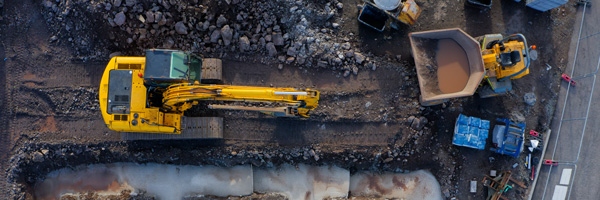
Construction Insurance is designed to indemnify the project owner and contractors for their labour, equipment, and building materials during the course of the construction project, including accidental equipment breakdown.

08. Preventing injuries on-site
On construction sites where potential hazards are present, keeping employees safe is a top priority. Safety measures should include a personal protective equipment (PPE) program, guided by policies and procedures that spell out what types of equipment are required for which jobs and locations.

Personal Protective Equipment
PPE is the equipment workers wear—from hard hats to safety boots—to help keep them safe in potentially hazardous work environments. The type of equipment required varies widely, depending on the type of work and the nature of potential hazards that may be present. PPE also needs to be properly maintained and inspected on a regular basis, and workers should be fully trained in the proper use of their equipment. PPE may include:
Head protection
Hard hats are designed to help protect the wearer against injury to the head. Different types and classes of hard hats provide protection against impact and penetration from above or laterally, as well as different levels of protection against electrical contact. Manufacturers state that hard hats are good for five years, depending on use, but in harsher environments that could be reduced to two years. This equipment should be reviewed on a regular basis and switched out when necessary.
Eye protection
Protective eyewear can range from safety glasses and goggles to face shields and masks. Any work that involves hammering, drilling, or cutting that can cause particles to fly requires eye protection.
Hearing protection
Exposure over time to loud noise is a leading cause of hearing loss. Workers exposed to noise in the workplace should wear hearing protection such as ear plugs, semi-insert plugs, ear bands, or earmuffs.
Hand protection
Different types of protective gloves are designed to deal with different types of hazards. For example, chemical protective gloves provide protection against exposure to chemicals, while others are designed to protect against abrasions, cuts, and punctures, as well as extreme heat and cold.

Breathing protection
Breathing protection ranges from simple dust masks designed to filter out airborne particulates to chemical canister respirators and supplied-air breathing apparatuses used where oxygen levels are low or toxic gases are present.
Foot protection
Safety footwear protects against a range of workplace hazards. Impact and crush resistance—the familiar steel toe or hard cap—is often a requirement on construction sites, along with puncture resistance for the sole and sides of the footwear. Other safety features may include slip resistance and protection against electrical contact. Appropriate footwear should have a green triangle on it, which indicates sole puncture protection with a Grade 1 protective toecap.
Specialized PPE
Specialized types of PPE are used in specific industries and for specific applications: the welder’s face shield that protects against intense UV light, the chemist’s splash guard face shield, or a circular saw operator’s cut-resistant pants are just a few examples.
Working at Heights
Fatal falls are still a top cause of death among construction workers and contractors. That means there’s room for improvement in site safety. Ladders, scaffolding, and fall protection are at the heart of a construction site safety program, and there are simple, cost-effective ways to improve safety practices when using these common pieces of equipment.

Ladders
Any piece of equipment with multiple joints or load-bearing platforms—like a ladder—can become a safety hazard, especially with wear and tear. Improper ladder use is a leading cause of fatal falls for construction workers. Ladder safety checks should be conducted prior to use.

Harnesses
A personal fall arrest system can be great insurance against a disastrous fall on a construction site—but only if it’s in perfect working order. Like any important tool, harnesses should be inspected closely and frequently, and always used properly.

Scaffolding
While scaffolding is an integral part of a construction site, it’s potentially the most dangerous for workers. This type of raised platform not only exposes workers to falls but also to electrocutions and falling objects. Practise careful tool placement and be conscious of weight limits.

09. Liability
Subcontractor Liability
Subcontracting can introduce significant liability exposure to a construction firm. If the work isn’t done properly and a loss occurs, the subcontractor could cost you your business, your reputation, or both. If the subcontractor has no insurance or insufficient insurance, you may be held liable. And if your insurance company now has to pay because of a subcontractor, your loss history will be impacted and your premiums may increase.
For this reason, it’s important to vet subcontractors before issuing a contract. The vetting process could include purchasing a credit report, asking for documentation of bonding capacity, and getting references from other general contractors.
A certificate of insurance that details liability insurance coverage should be requested from each subcontractor. This should be requested prior to each project or annually for subcontractors who regularly work for you.
The same goes for vetting vendors, particularly if you’re sourcing custom components or hard-to-find materials. In this case, you want to assess the vendor’s financial stability and shipping reliability—ask for copies of financial statements, purchase a credit report, and get customer references. For vendors who are critical to your operations, do your due diligence; in some cases, it may be worth lining up a second source just in case.

Site Visitors and Traffic Control
Visitors such as purchasers, suppliers, and even trespassers can get hurt on construction sites—but it’s the builder’s responsibility to keep visitors safe. Home purchasers, for example, may want to check in on the progress of their home while it’s under construction. But this is dangerous for many reasons; they’re unfamiliar with the site, don’t have proper safety gear, and could injure themselves on unstable structures.
Job site safety can be improved in two ways: communication and control. Communicate to visitors (and the general public, if applicable) that they’re entering a restricted-access site and must first check in with the site supervisor. Purchasers, subcontractors, and suppliers should also be aware of who may enter the site, when they’ll be there, and how they’ll enter the site.
Control the site with fencing, alarms, and motion sensors. Also, include a clause in the sale agreement that restricts your liability if a purchaser is injured on the job site. Precautions should be put in place if you’re operating on a commercial site where partial occupancy may occur before completion of the project. You could also create a brochure that informs visitors about your job site policy, including workplace safety and health act requirements.

Slips, Trips, and Falls
Falls are a leading cause of injury in Canada, but they also rank high on the list of preventable injuries. Slip and fall hazards take many forms, but the only way to reduce risk is to be aware of conditions on the job site and manage them appropriately.
For example, parking lots should be inspected at regular intervals for potholes, uneven surfaces, and other debris. Walkways and stairways throughout the site should also be regularly inspected and areas of concern clearly marked and repaired as soon as possible. Emergency exits should be obstruction-free at all times.
In the winter, if snow and ice removal is done by a third-party contractor, ensure there’s a written contract or service agreement that clearly defines the work to be done and the roles and responsibilities of each party. Obtain a certificate of insurance from the contractor and have your insurance broker review the coverages and other details to make sure their liability insurance is in order.
Indoors, all employees should keep an eye on the condition of the flooring, including floor coverings like carpeting, to help reduce the risk of slips and falls. It’s important that any wet floors are dealt with immediately (such as melted snow that leads to slippery surfaces).
All floor mats should be replaced at regular intervals and inspected on a daily basis. If this is done by employees, maintain a log book. If mats are replaced by a third-party contractor, a copy of the maintenance contract, certificate of insurance, and purchase orders or invoicing should be kept on file.
Establish an inspection and monitoring procedure to manage slip and fall hazards on the job site. A daily routine (or more frequent monitoring, if the weather dictates) could go a long way in reducing slips, trips, and falls.

Underground Utilities
Underground utilities can include communication lines, power lines, sewers, water pipes, natural gas pipes, and alarm systems, among others. Each type of underground utility presents its own hazards. But they all represent a significant injury exposure to workers from explosion, fire, asphyxiation, and electrocution—as well as potentially large losses from damaged equipment and business interruption.
Damage to underground utilities from excavation and trenching activities is more common than one may think. Many construction projects require some degree of excavation or trenching, so it’s critical that all efforts are made to prevent damage to these utilities.
Construction firms or contractors—along with the owners of the underground installations—should identify the utilities, locate them, determine potential hazards, and come up with a method of controlling them. A checklist identifying the utility services that must be contacted before any work begins is a simple and effective preventative measure. It’s also important to have a written procedure in place for conducting utility locates.
Simply receiving verbal confirmation is not sufficient—documentation confirming that all necessary precautions have been taken is important in the event a utility is damaged. An emergency plan should also be established in the event of a fire or explosion.

10. Emerging risks and challenges
It’s important to stay on top of the latest industry risks and challenges — and have a plan for how to deal with them, if and when they impact your business.
Skilled labour shortages and capacity risk
While the federal government is ramping up support for skilled trades, it will take time to tackle the construction industry’s current labour shortages. In the meantime, workforce planning can help to mitigate some of these risks—such as training partnerships and multi-shift plans. It’s also important to include realistic schedule buffers in bid documents, pre-qualify subcontractors based on workforce capacity, and add clear force-majeure and delay claim processes.
Prefabrication and modular adoption
While the adoption of prefab and modular construction can help to mitigate some of the impacts of labour shortages, it also opens up different insurance exposures. Construction firms exploring these options should understand their risk exposures, including quality assurance requirements for factories and off-site manufacturing controls. Talk to your broker about insurance for cargo or goods in transit, as well as bridging the gap between manufacturer’s insurance (for the factory) and construction project insurance (for the job site), to make sure you’re covered.

Supply chain and materials price volatility
While supply chain issues have eased from pandemic peaks, they remain challenging, particularly around the availability of steel, lumber, and cement. Construction cost indices show ongoing year-over-year increases in many markets, which could result in bid erosion, procurement delays and, in some cases, disputes over price escalation. Construction firms may want to consider the use of escalation clauses, as well as early procurement of long-lead items, multiple-supplier sourcing, price-hedging where practical, and transparent contract allocation of price risk.
Changing contractual and regulatory requirements
The Canadian Construction Documents Committee (CCDC) has released significant updates to contracts that affect procurement, payment procedures, and risk allocation. These include:
- CCDC 5A (2025): Construction Management for Services
- CCDC 5B (2025): Construction Management for Services and Construction
- CCDC 17 (2025): Stipulated Price Contract for Owners and Trade Contractors on Construction Management Projects
- CCDC 30 (2025): Integrated Project Delivery Contract
Provinces have also updated procurement and safety compliance guidelines. It’s important to stay on top of the most current CCDC versioning as well as current procurement guidance, since they drive insurance obligations and indemnity allocation.
Longer lead-times for contract bonds
Increased project complexity, supply chain issues, and market volatility are making sureties more cautious, meaning paperwork can take longer—especially for high-risk projects.
“Because so many projects failed during the pandemic, there’s a lot more scrutiny on the bonding side where it might not have been as rigorous or as prescriptive in the past. And that’s something that contractors have never had to think about in the past,” says Jones. That means they can no longer count on getting a policy just two or three weeks before going live with the first phase of a project.
11. Infection control

Many lessons were learned from the early days of the COVID-19 pandemic, providing a blueprint for businesses—from physical distancing to the expanded use of PPE—in the event of another pandemic, infectious disease outbreak, or global health crisis. Having an updated infectious disease response strategy can help construction firms rapidly respond in the event of another crisis and take steps to reduce the chances of an outbreak occurring at the workplace.
If infection control is required, check standardized protocols for construction sites from the Canadian Construction Association (CCA). In addition, apply recommendations and best practices from federal, provincial, and municipal public health authorities to your construction site procedures. A common infection control response plan should be established and maintained across construction sites.

12. Communication
On any job site, communication is essential for worker safety, efficiency, and productivity. That starts with clear lines of communication between the head office and the job site, as well as between site supervisors and on-site employees, subcontractors, and suppliers.
Field and office communication failures can result in delays, re-doing work, and costly mistakes. By establishing a formal chain of communication and documentation, you can mitigate risks and potentially avoid costly claims.
Communication includes phone, email, text, and instant messaging, but on a job site it could also include radios, intercoms, and even hand signals, as well as face-to-face meetings. For a simple request, a text might suffice, but for more complex matters a face-to-face meeting may be a better option. Job sites can get noisy, so hand signals (as well as flags or other visual alarms) are also useful forms of communication.

The head office should establish a formal chain of communication for important matters, such as ensuring warranties, permits, and building codes are communicated to the CFO and site supervisor. When it comes to project communication, it’s helpful to have a main point of contact, such as the project superintendent (who also keeps a record of all project communications).
All communications should be simple and direct; avoid jargon and slang, or any words or phrases that are open to interpretation. Consider whether communications need to be provided in more than one language, which is paramount for worker safety.
There are a number of cloud-based construction management and task management solutions, accessible via a smartphone on a job site, that can help streamline communication and document sharing. Some examples include Procore, Bridgit, Trimble Unity Construct, Autodesk Construction Cloud, and Buildertrend. Contact the Northbridge Risk Services team for applications available to our customers that can assist with construction site management.
12. Document and procedures

Surprisingly, many losses, liabilities, and subsequent insurance claims are not the result of a contractor’s negligence on a project, but because the contractor can’t provide the required information—the work performed, materials purchased, and suppliers used—or provide documentation to verify work performed by subcontractors.
The responsibility for obtaining documentation on work performed and materials used to complete a project lies with the contractor. Since actions against a contractor can occur years after project completion, efforts should be made to retain those documents indefinitely.
Examples of documents that should be maintained include contracts and construction schedules, technical specifications, shop drawings, tenders, invoices, purchases and payments, progress reports, inspection reports, audit reports, equipment records, and correspondence.
With the help of a document management system, maintaining proper documentation isn’t as complex or cumbersome as it may seem at first. Much of this data can be captured and digitized on smartphone apps, allowing you to easily create documentation for inspections, checklists, and audits, as well as take notes and photos or even do observation reports.
Once procedures are in place, it’s equally important to ensure that all managers, supervisors, site foremen, and workers understand and follow those procedures. Holding a workshop on document retention procedures and providing employees with a copy of those procedures is good due diligence and company practice.

14. Your next steps
Being proactive can go a long way in reducing risks and minimizing the impacts of damage, theft, and accidents. But things can still go wrong. That’s where insurance comes in—but there is no one-size-fits-all coverage for construction firms and contractors.
With such a wide variety of insurance packages out there, the choices can be overwhelming and a specific product like construction insurance might seem pointless if you already have a general business policy. But different industries bring different exposures, and the construction and contracting sectors come with their own unique set of risks.
Whether you work in infrastructure, residential, commercial, or institutional construction, there’s a lot on the line. When you take on a project, everything from equipment and employees to materials and job sites need to be protected—and a more general policy may not cut it. The bottom line is that every business needs insurance, but what’s most important is that you have the right coverage for the job.

Construction vs. Contracting Insurance
Running a nationwide construction firm requires a different toolkit than a small general contracting business. Any new construction project is typically a large undertaking, with many people involved. In turn, a construction firm needs more comprehensive and flexible protection that can extend to individual workers, which comes in the form of a construction insurance policy.
Contractors who specialize in a specific trade—whether electrical work, concrete installation, or interior finishing—face specific risks and must look out for their own safety. While contractors need some of the same coverages as a construction firm, their policy should also speak to their specific trade and its inherent exposures, as well as their business assets and daily operations.
Construction Insurance from Northbridge Insurance
Your insurance coverage should help you finish the job on time, no matter what happens. From project-specific insurance policies to comprehensive bonding solutions, our construction insurance policies cater to a variety of construction subsectors, including residential, commercial, institutional, and infrastructure.
Unique Coverages for Construction Firms
Property and liability coverage are the two main categories of business insurance, but there are more specific insurance features that speak to elements of construction projects.
Learn more →Builder’s Risk is a subset of property insurance tailored to the construction industry, Builder’s Risk is designed to cover the project owner and contractors for their labour, equipment, and building materials. This becomes increasingly important as a project continues, as more materials accumulate and more equipment is stored on the job site.
Contractors’ Insurance from Northbridge
Insurance
Contractors face a variety of risks, from the moment they take on a project to the moment they apply the finishing touches. From equipment damage to bodily injury, major issues can arise during the course of construction. As a contractor, you can’t count on someone else looking out for your best interests—you have to protect yourself in case something goes wrong. Without the right insurance, contractors can face significant expenses, like major equipment replacement costs and legal fees that come with liability claims.
Different types of contractors are exposed to different types of risks. We’ve crafted separate policies to align with the needs of each of these contracting subsectors, from general contractors to trade contractors. Our insurance products for contractors include some of the most important coverages to safeguard your tools and equipment, cover errors or omissions in your work, and keep your employees protected when they’re on the road.